


At some point or the other, we’ve all come to a rude awakening: life is meaningless. There is no truth to life. No value. No significance. Basically, there’s no purpose to this life. That’s precisely what nihilism is all about. It is extreme pessimism. Similarly, a person who is a nihilist will have no inherent purpose in life and won’t add any value to others’ lives either. They just have an impulse to destroy. That’s it.
For centuries, thinkers and writers have wrestled with these questions, not to drown in despair, but to understand what freedom will look like in a world without ready-made meaning. To understand this concept better, we have curated a list of the six best books on nihilism from all genres. They offer guidance to anyone who is willing to walk into the dark and see what truths or possibilities lie in this philosophy.
1. Thus Spoke Zarathustra by Friedrich Nietzsche

Nietzsche’s Thus Spoke Zarathustra is perhaps one of the most talked about books on nihilism philosophy. It’s a cornerstone to understand this concept. The book is written in a poetic style and has a biblical narrative. The book follows the prophet Zarathustra as he descends from a mountain to share his revelations with humanity.
Nietzsche uses Zarathustra’s voice to announce the “death of God”. It’s a metaphor he uses to describe the destruction of traditional religious and moral foundations. Because of their godlessness, they’ve all become nihilists. But rather than surrender to meaninglessness, Nietzsche challenges readers to confront it and move beyond it.
He introduces the concepts of the Übermensch (or “overman”) and the will to power, urging individuals to overcome inherited values and create meaning through strength, creativity, and self-transformation. It’s a dense and lyrical book that remains essential for anyone who is trying to understand the origins of nihilism.
2. Nausea by Jean-Paul Sartre
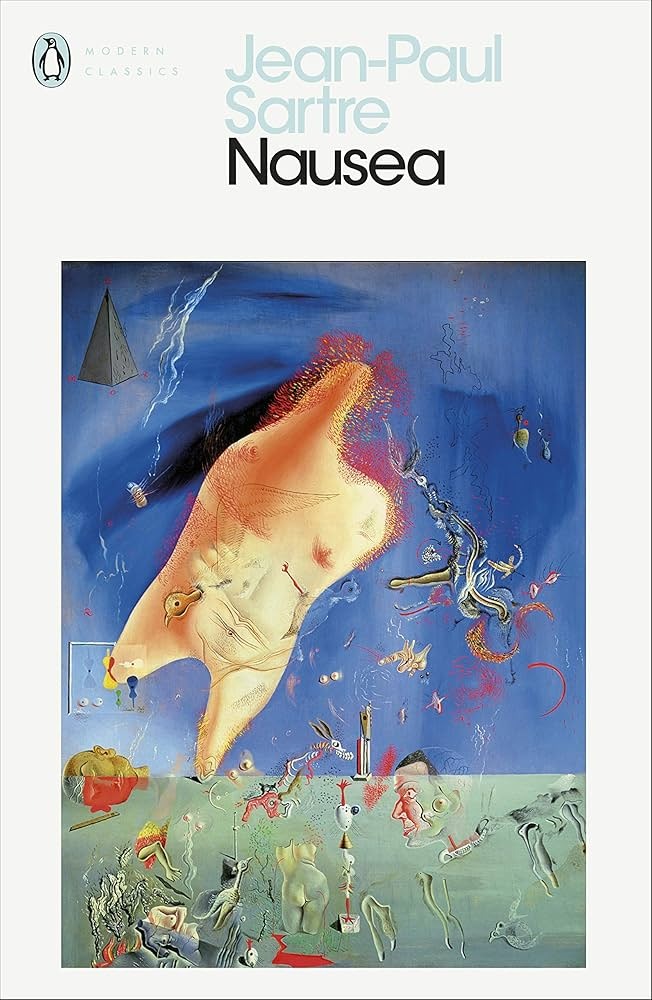
Jean-Paul Sartre’s Nausea is a defining novel when it comes to existential nihilism. It’s a powerful book that’s narrated through the diary of Antoine Roquentin, who is a solitary historian living in a small French town. I found this book a little difficult to read but after a bit of trial and error, I finally finished it after five months.
Roquentin begins to see that the world doesn’t have any meaning. From objects to people, and even his own memories seem to have lost any kind of coherence. Nothing makes sense to him. He names this feeling “nausea”.
Sartre uses Roquentin’s transformation to highlight that life has no inherent purpose or essence. Everything is simply just the way it is. Nausea is one among the best books on existential nihilism that invites readers to confront the void.
3. The Myth of Sisyphus by Albert Camus

This Albert Camus book on nihilism is yet another brilliant book on existential nihilism. This book has become a cult classic on the intern set today. He uses the Greek myth of Sisyphus who is condemned to push a boulder uphill only for it to roll backward.
In his book, Camus explores how humans and their struggles against an indifferent universe. He calls this confrontation “absurd”. It talks about the tension between our desire for meaning but we are met with the world’s silence.
Instead of despairing over this, Camus argues that embracing the absurd can lead to a form of freedom. It’s a brilliant book for those who want to understand the concept of nihilism.
RELATED READING: How To Overcome Nihilism And End Despair: 8 Ways To Overcome The Abyss
4. Notes from Underground by Fyodor Dostoevsky
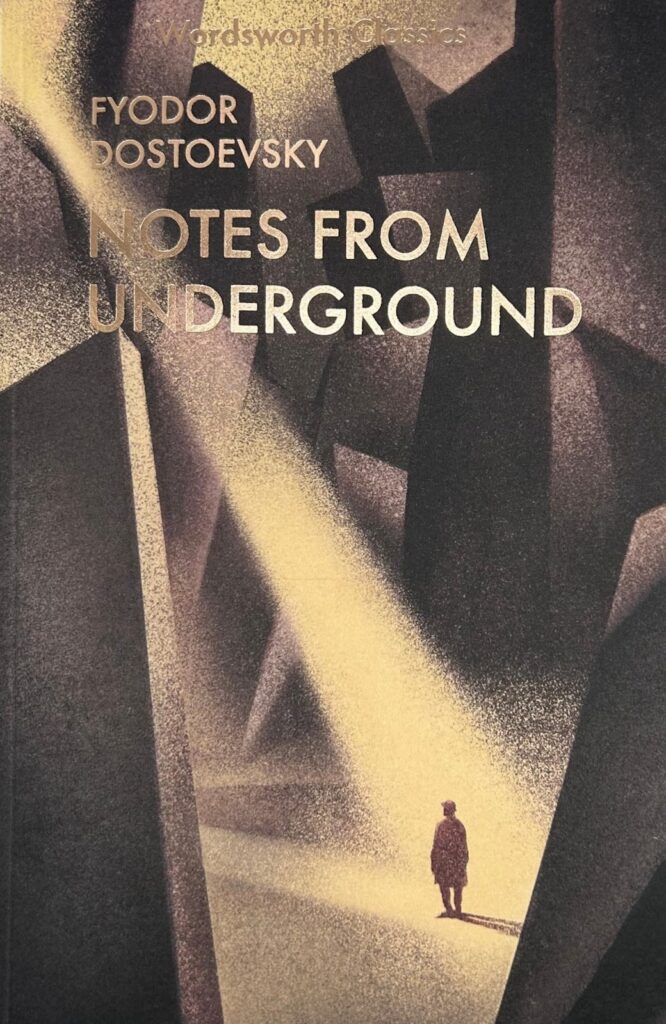
I love Dostoevsky and I’ve read almost all his works and Notes from Underground is his intense work of psychological exploration of nihilism. It’s written in one of the most brilliant ways you can ever imagine. It’s narrated as a confession from an isolated narrator called “Underground Man”.
The novel delves into the mind of someone who has rejected society, morality, and even rationality. The Underground Man is bitter about everything and soon spirals into resentment and paralysis. The book is a stark reminder of how nihilism can make a person go crazy. It’s as relevant as it was in the 19th century.
5. Father and Sons by Ivan Turgenev

An acclaimed Russian novel, the story follows the tensions between two generations. Between fathers and sons. The fathers have values but their sons are skeptical about things.
Bazarov, the son, is a young medical student and he is a nihilist. He thinks only the things that are proven by science are worthy of being acknowledged.
However, when Bazarov is met with love, mortality, and human vulnerability, he begins to question his ideology. Fathers and Sons is an important exploration of nihilism that everyone must read. This is one among the best books on nihilism for beginners.
6. No Longer Human by Osamu Dazai
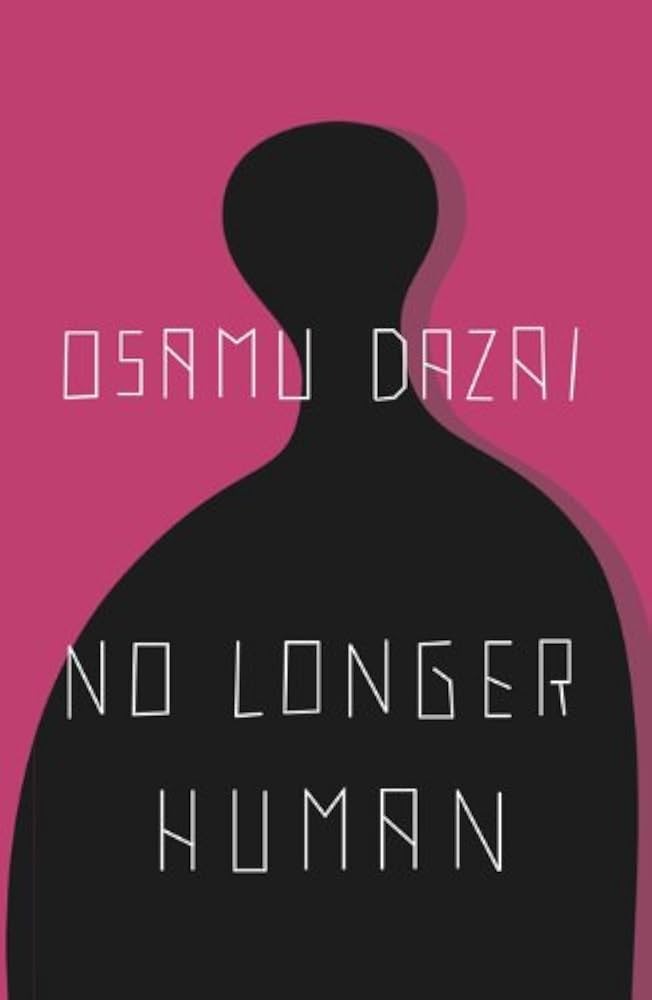
A crowd favorite among nihilists, No Longer Human by Osamu Dazai is a story about personal collapse. The book is told through Ōba Yōzō’s notebook who feels like he is alone in this world. He soon becomes an addict and wants to destroy himself.
His inability to connect with others is a major reason for his descent into alienation. Unlike other philosophical books on nihilism, this one analyzes meaninglessness from a distance.
It’s a great fiction book on nihilism that you can read but don’t let it get to you. After I finished reading this novel, I couldn’t think of anything else. Ōba Yōzō’s pain consumed me. I could feel the hollowness he was feeling. This is a great compliment for the writer but the readers of this book should know that it lingers.
RELATED READING: Camus vs Sartre: How To Be Free
7. Fight Club by Chuck Palahniuk
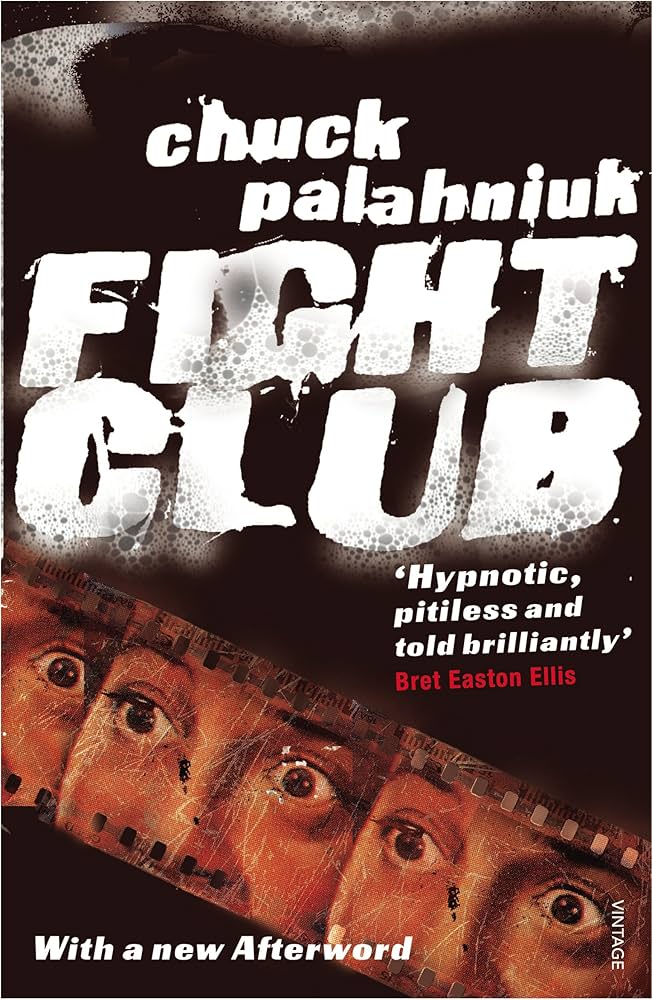
Palahniuk’s Fight Club is a dark and gripping story about an insomniac man who feels empty on a daily basis. He feels lost. Nothing makes sense to him anymore despite having a good job and a nice home. The sad part is that none of this makes him happy.
He meets a man named Tyler Durden who is fearless and also thinks that life is meaningless. Both of them start a fight club where men hit each other in order to feel something. But soon this turns deadly. It’s a remarkable book that became a blockbuster movie starring Brad Pitt and Edward Norton.
Conclusion
Nihilism can stem from many things. Rejections, personal losses, professional losses, and heartbreak. There were times when I was a staunch nihilist and felt disconnected from the world. It pushed me to question everything that I once used to believe. That’s why I started reading books on nihilism to understand the concept thoroughly.
Literature helped me understand nihilism without consuming me. It is unsettling but it helped me understand myself better because when you face the void, it doesn’t end your journey. Nihilism begins a new chapter in your life where you are shaped by awareness, honesty, and choice.