


There is a rhythm to growth that no shortcut can replace. To nourish and nurture your potential means learning to move with that rhythm, even when the pace feels slow. It asks for patience, for consistency, for the kind of steadiness that rarely trends online.
We live in an age of immediate answers. Every platform promises a faster way to improve, achieve, and become. But potential isn’t built in haste. It deepens through ordinary discipline, through pauses that allow the mind to breathe. What grows too quickly often forgets its roots.
This piece is not about pushing harder. It is about building strength quietly. It is about the quiet effort that rarely gets seen. Somewhere between who you are and who you’re becoming, something steady begins to take root. That is where growth begins to gather.
Growth begins quietly, in the small choices that protect your energy. The next ten ideas are not shortcuts but ways to return to yourself and to build a kind of steadiness that lasts longer than motivation.
How To Nourish And Nurture Your Potential: 10 Helpful Tips
Growth begins quietly, in the small choices that protect your energy. The next ten ideas are not shortcuts but ways to return to yourself and to build a kind of steadiness that lasts longer than motivation.
Tip #1: Create emotional room to grow
To nourish and nurture emotional space means creating safety inside yourself. It means untangling the noise of old stories, the ones that make you shrink when you should expand. You cannot grow freely while carrying the weight of every past version of you.
Make stillness a daily boundary. Not everything deserves a response. Not every emotion needs to be fixed. When you stop chasing calmness and begin allowing it, clarity returns. The mind becomes lighter, and what once felt impossible starts to unfold naturally, without force.
Growth also asks for softness — the willingness to forgive what you outgrew and the grace to keep learning without guilt. Treat silence as company, not a challenge. Within it, your feelings speak more clearly, reminding you that peace is not something you win, but something you allow.

Tip #2: Relearn rest as a practice, not a reward
The idea of rest has been mistaken for laziness. We rush until we are too tired to notice what we’ve lost. Yet real progress begins where rest is allowed to exist. It shapes thought, emotion, and endurance. It rebuilds what effort alone cannot.
Rest is not a reward at the end of accomplishment. It is the foundation that holds it. When you listen closely enough, you find that silence is not empty. It rearranges what feels tangled, it brings back what was fading. Stillness repairs the cracks that discipline alone ignores.
Rest should not feel rare; it should be a ritual. When you protect your stillness, you return to yourself clearer, calmer, and more awake to possibility. The mind cannot stay creative without recovery. The body cannot stay present without pause. This is where balance begins to feel like belonging again.
Tip #3: Let curiosity replace comparison
Comparison steals time. It turns someone else’s timeline into your distraction. Progress cannot survive that kind of noise. It forgets that growth has seasons, and each one arrives differently for everyone.
Curiosity, however, is generous. It opens rather than closes. It lets you watch without judgment, to learn from the details of another life without losing your own shape. Curiosity turns envy into education. It asks what effort felt like for them, what patience looked like, and how failure was carried.
When you stay curious, you start to see success as texture rather than height. You realise that there are infinite ways to arrive, and none of them require imitation. Curiosity softens competition. It turns comparison into perspective, and perspective into peace. The more you wonder, the more you learn to hold your own progress with gentleness.
Replace comparison with observation. Trade envy for empathy. The moment you do, learning becomes lighter, and growth begins to feel like freedom again. Curiosity helps nourish and nurture potential from within.
Tip #4: Honour small wins as proof of continuity
Progress is often quiet before it becomes visible. The work you do in silence rarely announces itself, yet it matters more than the moments that draw applause. Growth begins underground, like roots finding direction before anything blooms.
Small wins are not minor; they are markers of endurance. They show that you kept showing up when nothing seemed to change. A single good morning, one clear thought, one task done without rush, these are signs of stability returning.
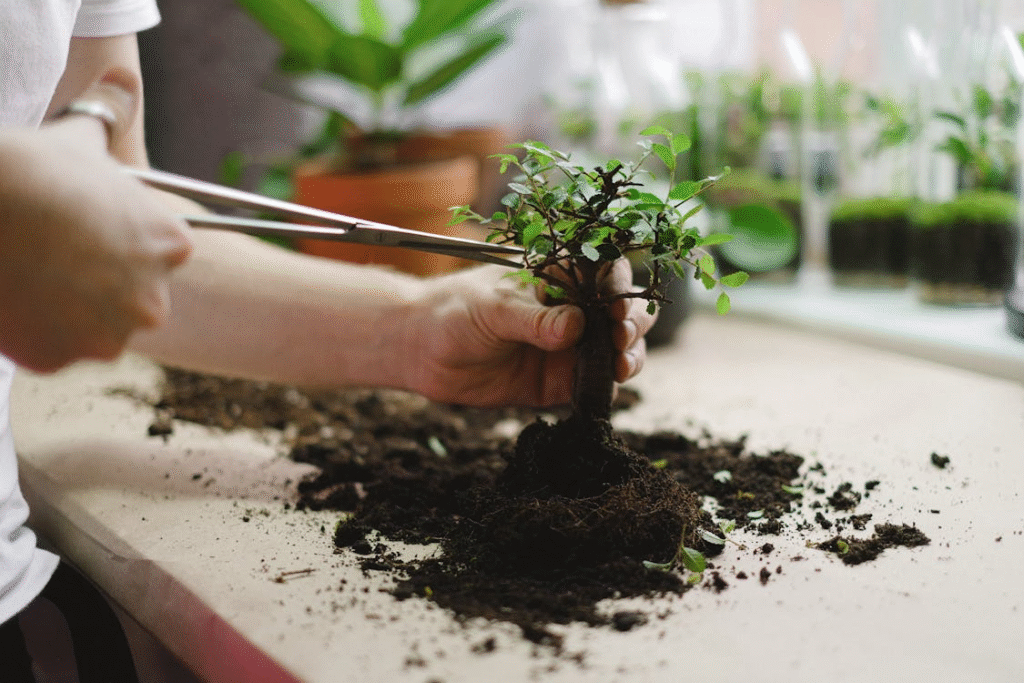
To honour small wins is to stay loyal to the process. It is to recognise that becoming consistent is more valuable than being impressive. Every gentle repetition strengthens the foundation beneath your next leap. Trust the invisible work. The plant does not doubt its roots before spring arrives.
Tip #5: Surround yourself with reflective people, not reactive ones
To nourish and nurture relationships that encourage depth and honesty is to recognise that safety is also a kind of strength. The people you keep near determine how you see yourself. The right ones help you expand; the wrong ones make you shrink.
Reflective people are patient. They give their attention without hurry. They challenge ideas gently, helping you find meaning beneath reaction. In their presence, your thoughts find order and your emotions find room. They teach you that listening is also a form of participation, a way to grow without rushing toward action.
Stay close to those who make you think better, not faster. Conversation with them feels like breathing after noise. The quiet they bring becomes its own kind of guidance. Growth needs that calmness, the sense of being seen without being judged.
RELATED READING: Top 15 Fruits For Skin Whitening And Glow For Real Results
Tip #6: Embrace solitude without confusing it for isolation
Solitude is not the absence of connection. It is the return to it. When you step away from noise, you hear yourself without distortion. The quiet is not empty; it is instructive. It shows you what still feels true when no one is watching.
Isolation drains, and solitude restores. The difference lies in intention. Choosing time alone for reflection teaches self-trust. You begin to notice what thoughts come from you and what echoes belong to others.
In stillness, ideas rearrange themselves. Creative independence grows stronger because there is no one to imitate, only yourself to understand. This is how solitude becomes fuel for purpose, teaching resilience to grow in silence first.
It carries a certain gentleness too, the calm of being with yourself and finding that it is enough. It is where clarity gathers quietly, where the mind repairs from constant comparison. When you can sit alone and feel complete, connection becomes choice, not need. Solitude, when honoured, deepens every bond you return to.
Tip #7: Rebuild your attention span
Attention has become fragmented, pulled apart by speed. We live surrounded by noise, always scrolling for the next small satisfaction. But meaning rarely survives in fragments. To think deeply again, you must relearn how to stay.
Digital fatigue is a quiet erosion. It makes the mind impatient with stillness, allergic to slowness. Repair begins with deliberate quiet. Step away from constant input. Walk without headphones. Sit through the first few minutes of boredom until your mind begins to hum differently.
Read something that demands your full attention. A long sentence, a slow chapter, a thought that unfolds over pages. This kind of engagement strengthens focus, the way still water reflects light: evenly, without distortion.
Attention is not measured in minutes but in presence. Rebuilding it takes discipline, but it also takes mercy. Allow yourself to notice again – the texture of silence, the shape of concentration returning. In that quiet, the mind remembers its depth.

Tip #8: Learn the discipline of saying ‘No’
The ability to say no is a form of wisdom. It begins with understanding where your attention belongs. Without that awareness, your energy scatters, spent on things that neither serve nor sustain you. You start to move constantly, yet go nowhere.
Boundaries are not distance; they are direction – the way you remind yourself what is worth carrying. They decide what enters your day and what stays outside it. Protecting energy is not about withdrawal but discernment — choosing peace over obligation, depth over distraction.
With practice, learning when to say no helps nourish and nurture balance. It gives shape to your inner world. It keeps you from scattering yourself across a hundred unfinished beginnings.
Every no builds a foundation for focus. It is an invisible kind of strength, quiet but exact. When you stop trying to please everyone, your life gains contour. Space returns. What you allow in begins to reflect who you are becoming, not just who you’ve been.
Tip #9: Treat creativity as a daily hygiene
Creativity is less a gift and more a daily practice of noticing. It is a habit of staying open to the ordinary, of treating imagination like breath; something you tend to without ceremony. When you treat creation as routine rather than revelation, the mind remembers how to move without permission.
Small rituals keep creativity alive. Ten minutes of journaling, a quick sketch, a few lines written before sleep; these acts polish awareness. They teach you to observe without judging, to document without needing an audience. The page or canvas becomes a space where you meet yourself honestly, where the world’s noise cannot follow.
You do not need brilliance to create. You need presence. The act itself is the nourishment. It keeps your inner life from hardening under repetition and screens. When you practice creativity daily, ideas stop feeling rare. They become companions.
Think of it as hygiene, not achievement. A way of clearing mental dust, of keeping imagination supple. The work you make privately repairs you. The ritual itself is the reward. Creativity, when tended with steadiness, becomes the most reliable form of self-understanding.
Tip #10: Trust slow change over sudden transformation
Transformation rarely happens in bursts. It arrives quietly, through patterns repeated until they feel like instinct. The grand changes we imagine are often only the visible ends of years spent adjusting, trying, pausing, and beginning again.
Fast change burns bright but fades fast. Slow change builds endurance. It leaves space for mistakes, for recalibration, for the softer forms of wisdom that speed forgets. Each season of patience teaches something about scale, how the most lasting work happens beneath what can be measured.
Trust the rhythm of your own becoming. You do not need constant momentum to move forward. Some days will feel still, but that stillness is how strength gathers. You are not behind; you are building depth.
Progress is rarely dramatic, but it is dependable. It is shaped by attention, repetition, and quiet faith in your own capacity to continue. And to truly nourish and nurture your potential, trust time.
Conclusion
To nourish and nurture your potential means learning to see growth as a garden, not a race. Each part of you: emotion, rest, curiosity, community, patience, is a root feeding something larger. When you tend to them, you build a life that feels whole from the inside.
Self-work is not indulgence but a responsibility. To take care of your thoughts, boundaries, and attention is to protect what sustains you. The inner world you maintain becomes the soil for everything else you wish to grow.