

I’ve found that often times hope doesn’t appear as a grand idea; it shows up in a few honest words that sound a lot like truth. Poetry has a way of saying what we’ve felt all along but never named. That’s what makes inspirational poems about life feel hopeful: they listen before they speak.
Every poet here holds a different kind of hope. You’ll meet Frost, still wondering which path to take; W. H. Davies, asking us to pause; and voices like Ada Limón and Mary Oliver, who bring their quiet clarity to the noise of now. Together, they show that time doesn’t change the need for courage, it just gives it new words.
15 Famous Poems About Life That Inspire Hope And Courage
The beauty of poetry lies in how it transforms ordinary thoughts into meaning. A single image or feeling can shift the way we see life. These fifteen poems explore that transformation, how words capture endurance, love, and renewal across time. Each one reminds us that poetry continues to guide us through change.
1. The Road Not Taken by Robert Frost
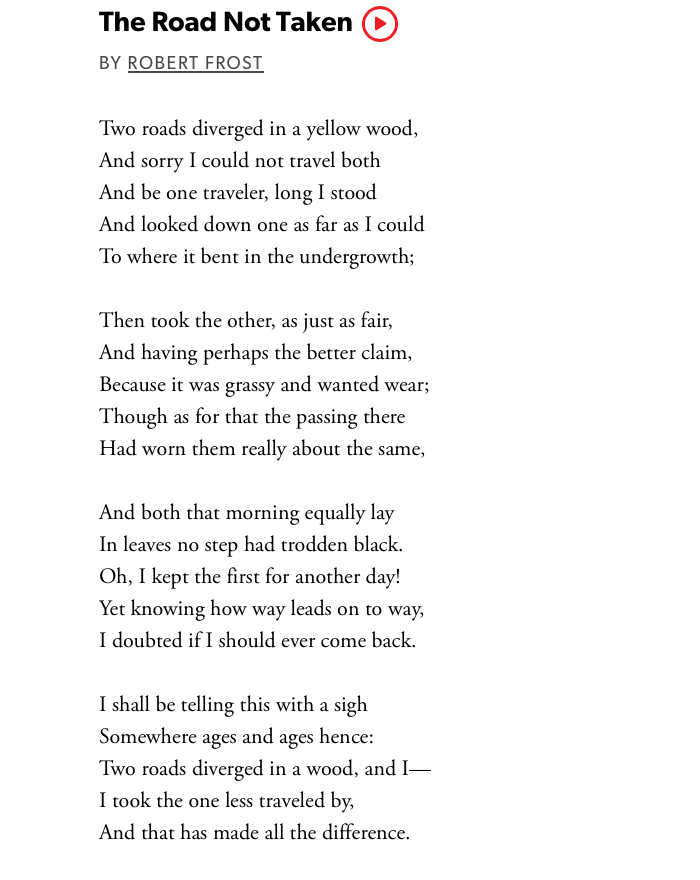
The road not taken has been misread for years, yet maybe that’s the point. Frost understood that interpretation itself is part of living. We keep retelling it, seeing new meanings as we grow older.
The road not taken shows why poems inspire long after they’re written; they shift with us. Each generation hears something different: freedom, regret, relief, or peace. Frost never tells us which road is right, only that walking is what matters, and maybe that’s the only truth we ever needed.
2. The Peace of Wild Things by Wendell Berry
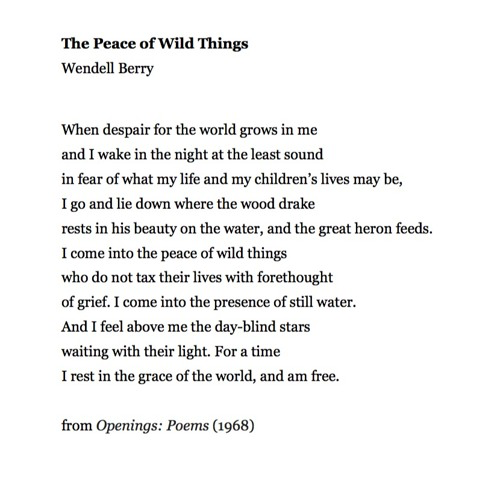
Berry’s words carry calm, like light at the end of the day. The Peace of Wild Things begins with worry and slowly finds quiet through nature. His poem reminds us to pause, to look outward when the mind feels heavy.
The meaning of life in poetry here is simple: peace already exists around us. We just forget to see it. Berry shows that nature’s stillness isn’t escape, it’s how we return to balance when the world feels too loud.
3. Invictus by William Ernest Henley
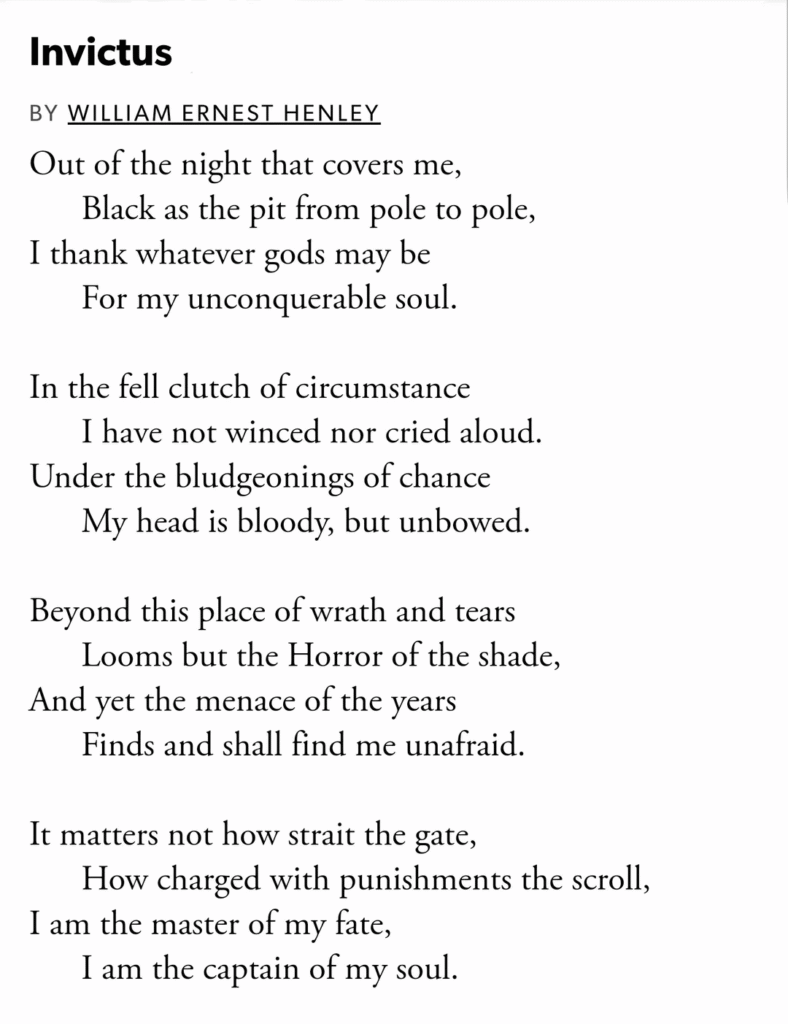
Henley’s Invictus reads like a steady heartbeat. Each line is deliberate, not emotional. The control in Invictus rhythm mirrors the poem’s message: endurance through self-discipline. It’s what keeps the piece powerful even today.
As uplifting poetry, Invictus stands apart because it refuses sentimentality. Instead, it reminds readers that composure itself can be an act of defiance. Its voice earns respect through restraint.
4. Leisure by W. H. Davies
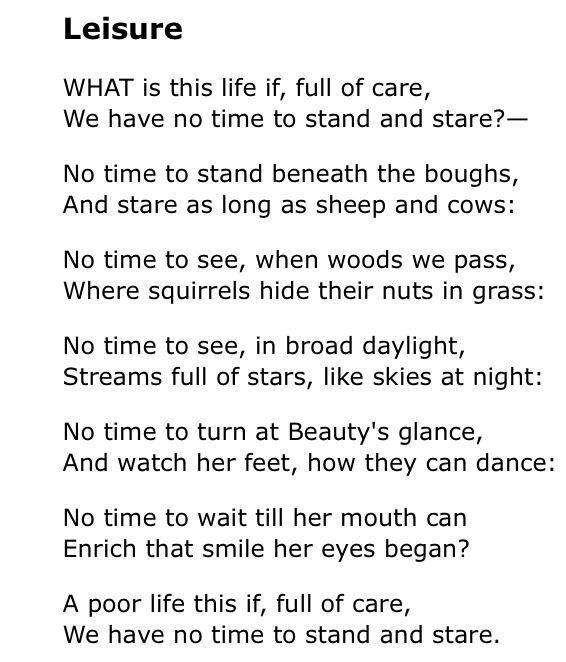
Davies’s Leisure is about slowing down before life rushes past. He talks about how we lose sight of joy because we’re always hurrying somewhere. The poem doesn’t use fancy words, it feels like common sense we forgot to keep.
Among beautiful poems about life, it stands out because it makes peace sound easy: take a moment, look around, and let yourself feel what you’ve been missing.
5. The Journey by Mary Oliver
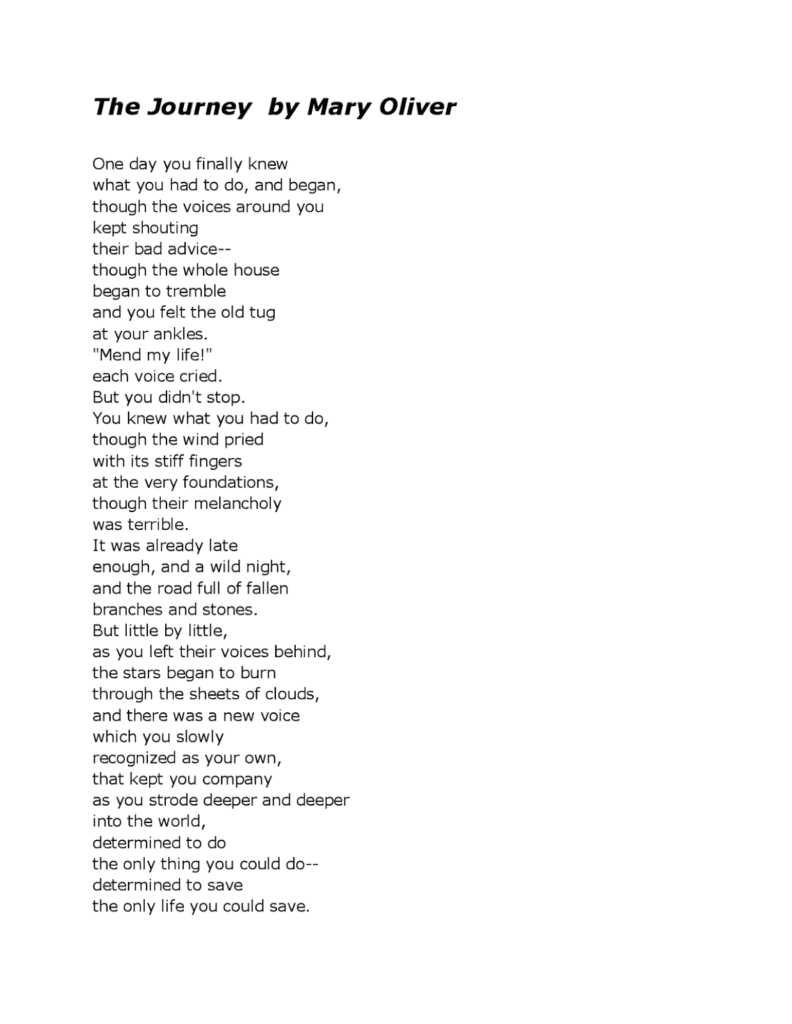
Oliver’s The Journey begins quietly, with a single decision to walk away from the noise and toward one’s own voice. It reminds us that survival sometimes means choosing solitude.
The Journey becomes a map for courage, guiding us through confusion and resistance.
Among powerful motivational poems, The Journey redefines honesty: it doesn’t cheer, it listens. Oliver’s calm insistence that “one day you finally knew what you had to do” becomes both invitation and instruction: to keep moving, even when no one else understands.
RELATED READING: 10 Best Poets Of The 21st Century
6. Instructions on Not Giving Up by Ada Limón
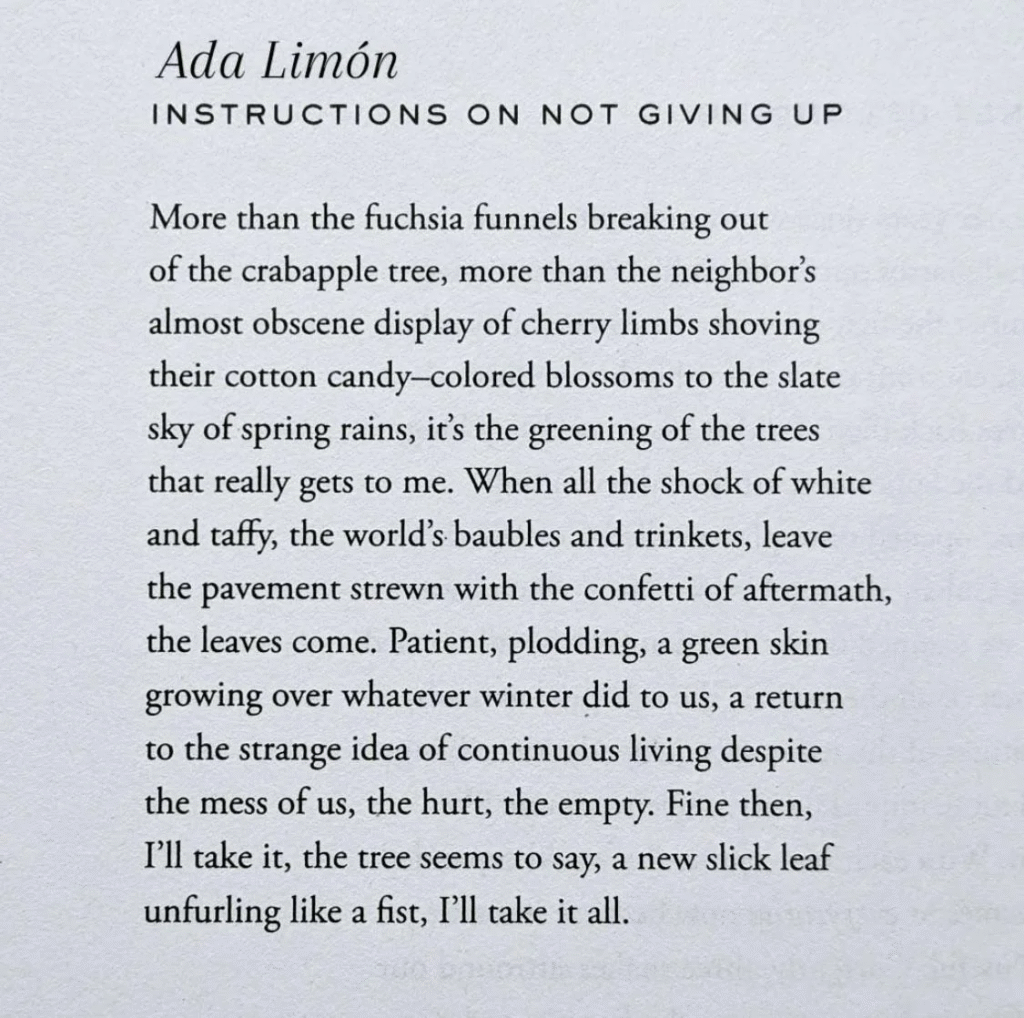
Ada Limón looks at the world after winter and sees courage in small things. The trees don’t ask for praise; they just start again. Instructions on Not Giving Up fits among motivational poems for success because it shows that real strength is the choice to begin.
Each line moves quietly, like morning light, where determination feels more like faith than ambition. Instructions on Not Giving Up reminds us that resilience isn’t loud, it’s the steady return of life after difficulty.
7. Kindness by Naomi Shihab Nye
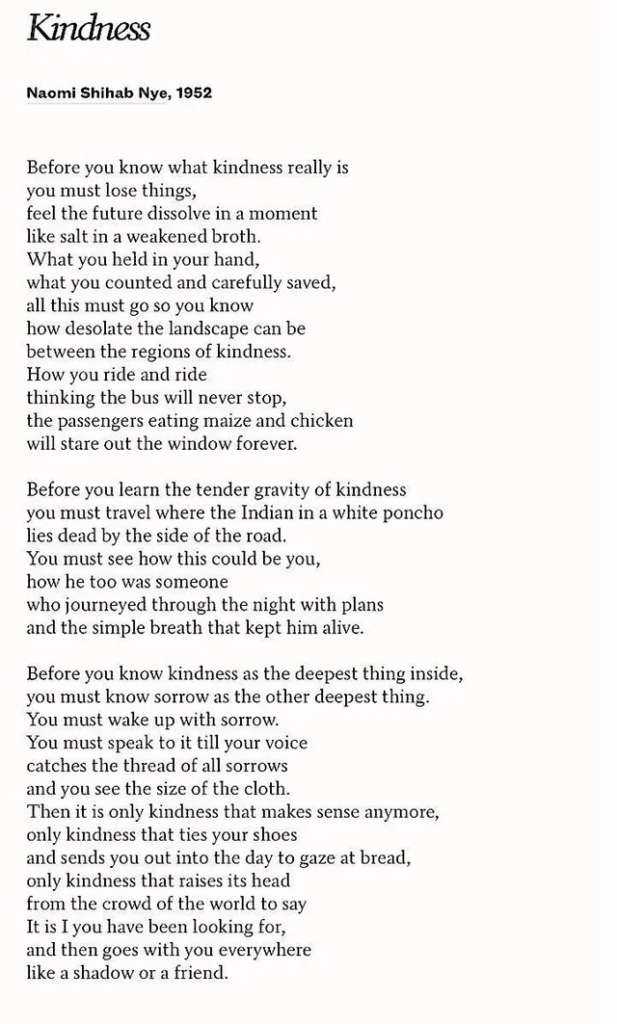
A bus ride through sorrow becomes the landscape of transformation. Nye’s Kindness offers no neat comfort, only the clarity that comes after loss. Kindness belongs to those short poems about life that change you by naming what hurts and still calling it holy.
The language feels carved from humility; every image opens like a door. By the end, kindness is not a virtue to be learned but a truth to be remembered; that tenderness is strength in its most human form.
8. The Uses of Sorrow by Mary Oliver
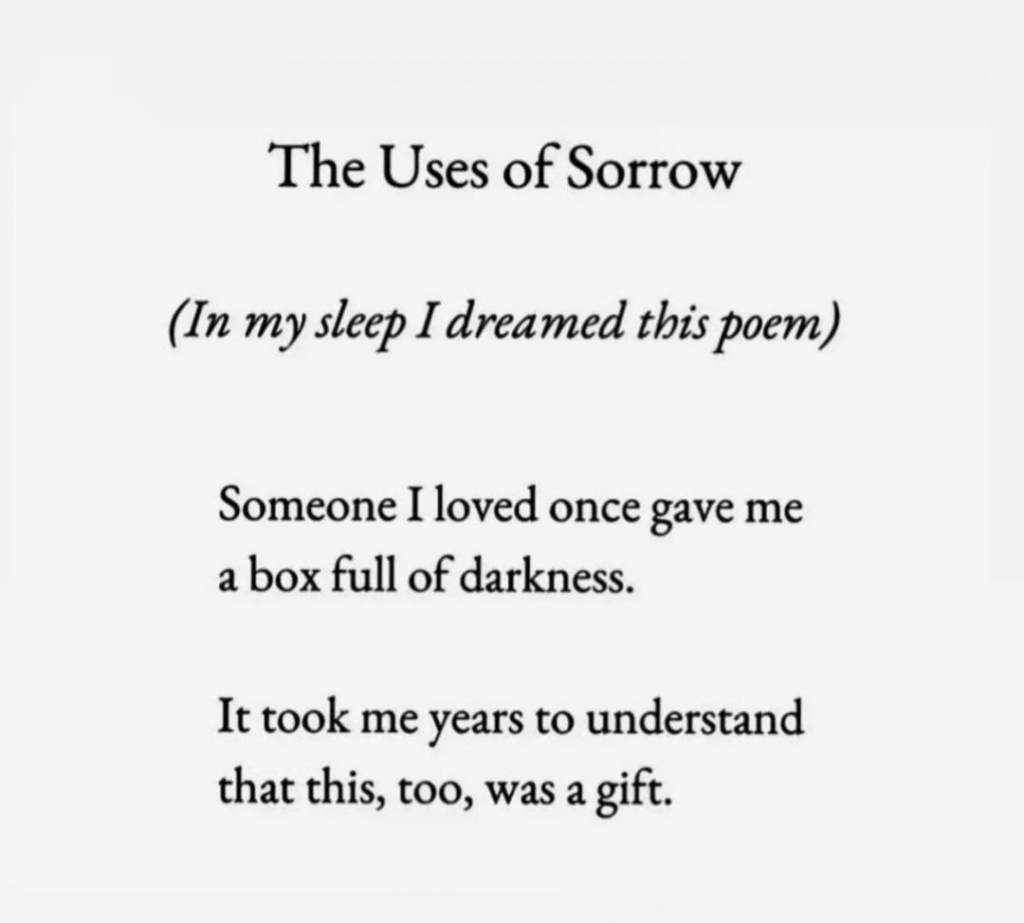
In The Uses of Sorrow, Mary Oliver turns a painful experience into reflection. The poem is short and gentle, like a thought that arrives after crying. It belongs to those life lessons poems that remind us pain can help us grow.
Oliver calls darkness a gift, suggesting that even sadness has purpose. Her tone is soft, full of forgiveness, as if she’s teaching us that healing comes from understanding, not forgetting.
9. Love Is Not All by Edna St. Vincent Millay
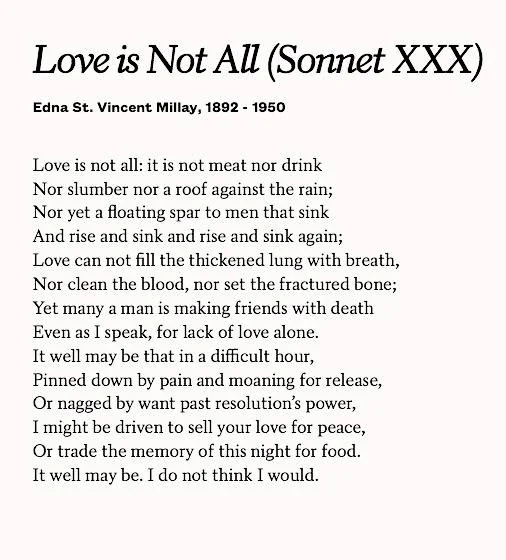
Millay asks a hard question: what is love worth when it can’t fix pain or fill an empty stomach? Her answer is simple: it still matters most. Love Is Not All isn’t a grand declaration but a quiet reflection on how love endures even when it can’t save us.
Among life and love poems, it feels deeply honest. Millay shows that love isn’t a cure; it’s the meaning we return to again and again. Her words feel steady and clear, cutting through all the illusions around it.
10. The Dead by Billy Collins
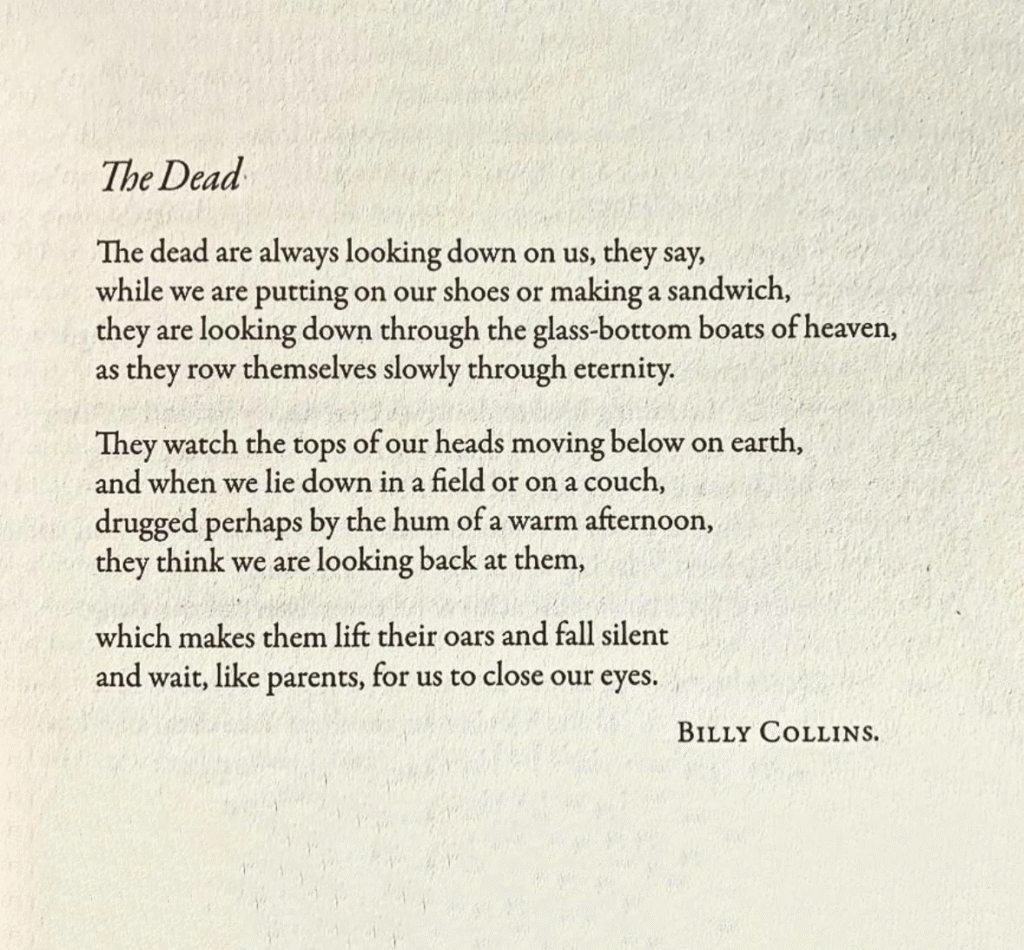
Few poets write about life and death with Collins’s calm mischief. In The Dead, he imagines the afterlife not as silence but as watching, a kind of affectionate surveillance. The Dead reframes loss as intimacy: the gone are near, simply on another balcony of existence.
His humor does not dilute grief; it dignifies it. Through his lens, death becomes not a severing, but a continuation of love’s attention, a gaze that never entirely fades.
RELATED READING: 15 Poems That Heal Grieving Hearts
11. Snowdrops by Louise Glück
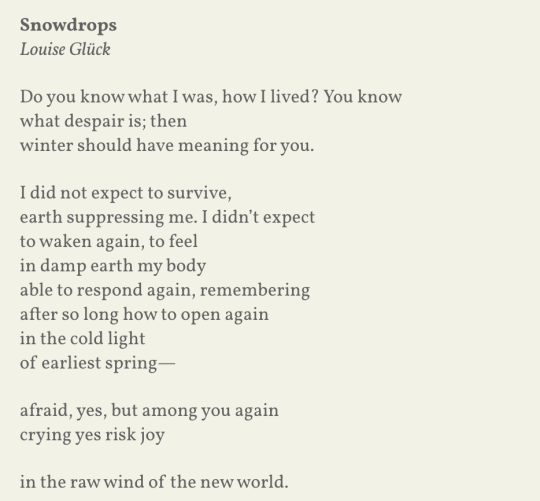
Glück, one of our famous poets, writes of resurrection without grandeur. In Snowdrops, she watches the first flowers push through frost, a vision that turns despair into something meaningful. The poem speaks softly of survival; the body remembers warmth even when surrounded by cold.
There’s a quiet power in Glück’s restraint, the kind that mirrors the strength of a woman who endures without needing recognition. Her words move gently, reminding us that renewal rarely arrives loudly. It grows in silence, in faith, in the meaningful act of continuing. Through her language, hope feels ordinary again, something we can reach.
12. Let Evening Come by Jane Kenyon
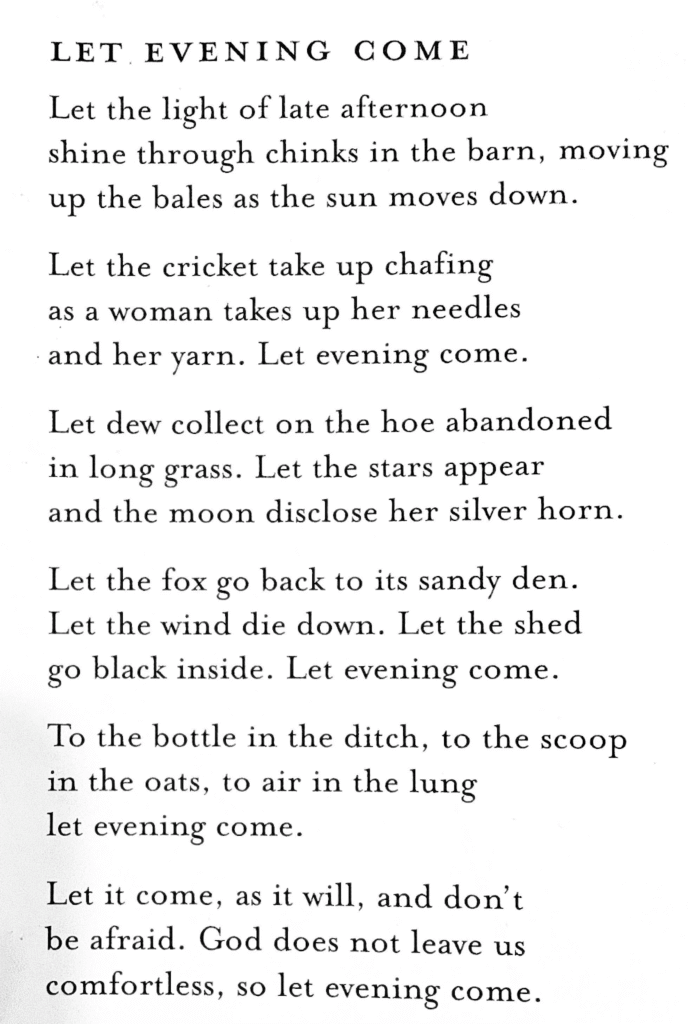
In Let Evening Come, Jane Kenyon writes about facing change with grace. She offers encouragement to stop struggling against what’s natural, to see endings as part of life. The poem reminds us that life’s too short to waste on denial.
Her lines move like a gentle wind, steady and forgiving. Kenyon turns acceptance into comfort, showing that peace can exist even in loss when we let ourselves rest inside the rhythm of time.
13. To Be Alive by Gregory Orr
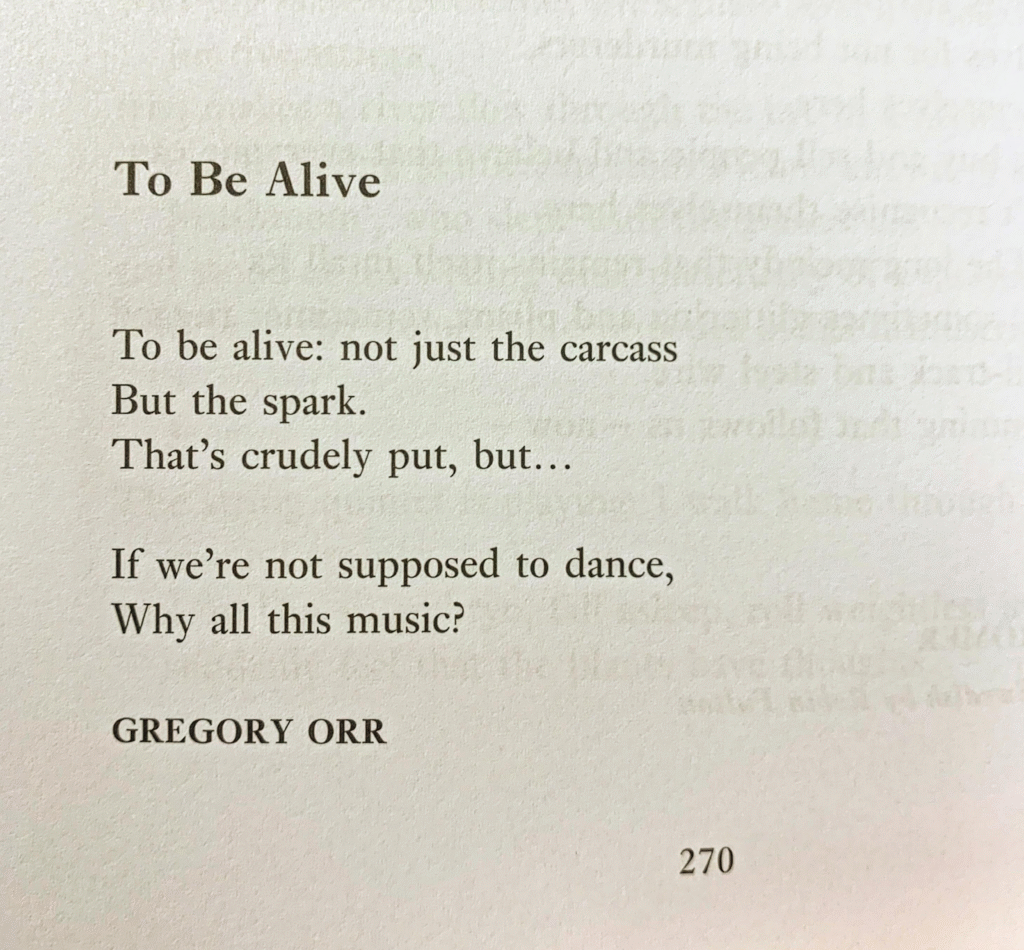
Gregory Orr’s To Be Alive reflects on what it means to keep going. Through struggles and bad times, he searches for a spark of meaning in the ordinary. The poem shows how small moments can hold great comfort.
Orr writes with honesty and calm. He sees the world as fragile but still miraculous. There’s no demand for perfection, only a sense of wonder that breathing and feeling are already enough to call life beautiful.
14. Wild Geese by Mary Oliver
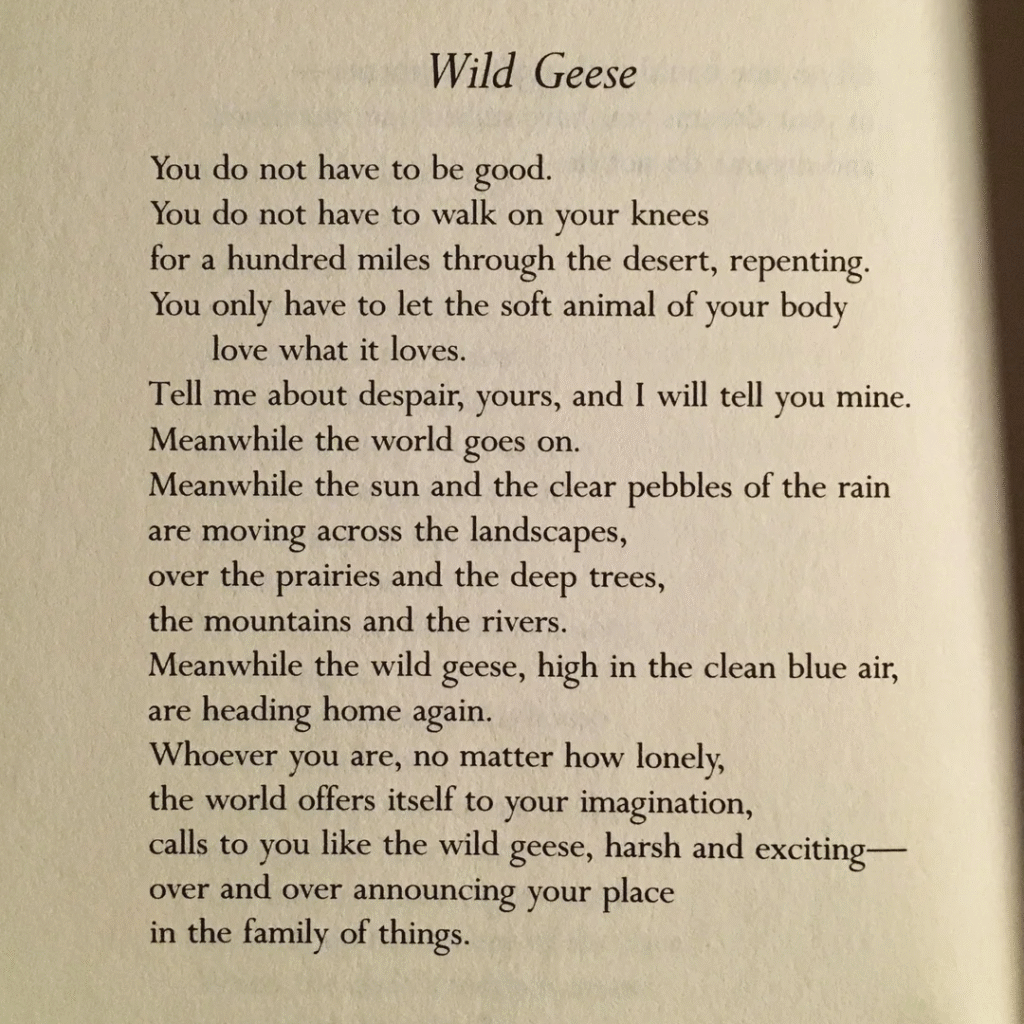
Through the sweep of sky and sound, Oliver returns us to ourselves. Wild Geese carries the rare power of strength in hard times; its comfort is not in escape but in acceptance. She writes of change and growth as natural laws, of the body belonging to the world again.
Each image feels elemental: rain, wind, wings in motion. The poem lies in its simplicity, reminding us that even pain can become a map back toward wonder.
15. Won’t You Celebrate With Me by Lucille Clifton
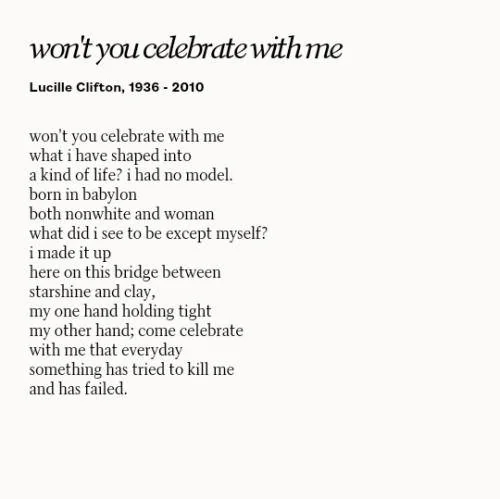
Clifton’s voice rises from the ache of endurance. Won’t You Celebrate With Me radiates deep determination, crafted by a woman who built herself from absence. She writes of surviving systems designed to erase her, yet the tone is not bitter; it’s triumphant.
Won’t You Celebrate With Me extends its arms toward helping others, transforming private strength into shared victory. Clifton’s celebration is both personal and universal, reminding us that poetry itself can become the spark that shapes how we think, feel, and grow.
How Does Reading Poetry Influence Our Mindset?
The human mind responds to poetry as both art and exercise. According to this resear, reading poetry enhances emotional depth and reflective thinking. Here’s how:
- Poems teach the hard work of attention, because each word demands presence.
- They reframe failure as a threshold of wisdom, not defeat.
- Lines and quotes linger long after reading, shaping our inner dialogue and strengthening self-understanding through rhythm and repetition.
Conclusion
Across pages where Oliver’s geese call, Berry’s stillness breathes, and Nye’s kindness endures, these inspirational poems about life teach us how to begin again. They turn reflection into renewal, showing that language can steady us through change. In their echoes, we rediscover what it means to live with grace. May we all live in poetry with grace!
7 Poems That Prove E.E. Cummings Is The Only Poet You’ll Ever Need To Read